

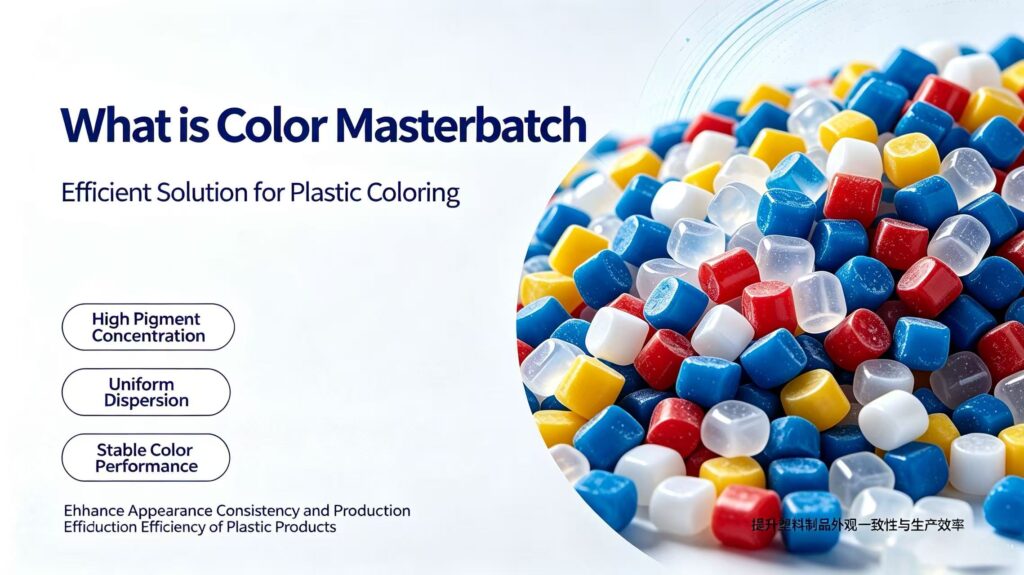
Color masterbatch is a high‑concentration solid coloring pellet for the plastics industry. It is produced by compounding and granulating pigments, carrier resins and functional additives, and is widely compatible with various plastic processing technologies such as injection molding, extrusion and blow molding. Compared with the traditional method of direct powder coloring, color masterbatch delivers reliable and stable coloring performance for products including packaging, home appliances, auto parts and daily‑use plastic goods. It effectively improves the appearance consistency of plastic products and raises overall production efficiency. It has four prominent advantages. First of all, it adopts high‑concentration pigments with high pigment loading and low addition ratio, helping enterprises cut comprehensive coloring costs. Secondly, it features uniform dispersion. Fully encapsulated by carrier resin, pigments can effectively prevent appearance defects such as color spots and streaks on finished products. Thirdly, it ensures stable color. Strict batch‑to‑batch color difference control keeps consistent color even in mass‑volume production. In addition, it enables clean and simple operation. Free of pigment dust pollution, it can be mixed directly with raw plastic materials for processing and simplifies the whole production procedure

Guide to Using Color Masterbatch: Improve Color Stability and Production Efficiency(English) Color masterbatch is a vital coloring material in the plastic‑processing industry. Thanks to its uniform coloring, easy operation and environmental‑friendly features, it is widely used in injection molding, extrusion and other plastic product manufacturing. To bring out the best performance of color masterbatch, a standardized operating procedure is essential. Color Formulation The first step is color formulation to accurately match the target color required by customers. According to substrate properties and product application scenarios, develop suitable masterbatch formulas to prevent color difference in subsequent production. Trial Production After color matching, move on to trial production and test sample quality. Check coloring performance, pigment dispersion and physical properties of test samples. Adjust formula parameters in time and confirm all specifications meet requirements before mass‑scale production. Processing Control During formal production, strict processing control is required. Thoroughly mix color masterbatch with plastic raw materials before molding. It ensures even dispersion of masterbatch in raw materials and prevents defects such as uneven shade and color spots. Usage Guide Proper usage directly determines the final product quality. Set the correct addition ratio of masterbatch according to plastic substrate type, product thickness and processing equipment. Adjust processing temperature and screw speed to realize full melting and dispersion of pigments. Besides, store raw materials properly against moisture to avoid bubbles and color deviation caused by dampness. Standardize operations in feeding, mixing and molding to reduce defects caused by human error. A complete and standardized workflow for color masterbatch helps cut defective rates and production costs, and improves surface quality of plastic products. By following four key steps: color formulation, trial production, processing control and standard usage, you can consistently deliver qualified products with stable and uniform colors.

The quality of color masterbatch directly affects the appearance, yield and compliance of plastic products. Choosing a trustworthy masterbatch supplier is critical for stable manufacturing. Price should not be the only factor. Three key points deserve high attention: formula system, dispersion performance and batch‑to‑batch consistency. Formula Traceability Formula traceability means the supplier maintains complete standardized R&D and production files. Raw material grades and proportion parameters of each batch are well‑documented. If color abnormalities occur during production, problems can be quickly traced. Color reproduction and adjustment can be realized efficiently to reduce downtime losses. Color Difference Control Color deviation is one of the most frequent troubles in plastic processing. Professional suppliers carry out standardized color inspection and compare finished goods batch by batch to strictly control color tolerance. It guarantees stable and uniform color across different production lots, preventing inconsistent shade and maintaining consistent appearance for end‑products. Eco‑friendly Material Standards Raw materials must comply with relevant industrial environmental regulations. For export, food‑contact, home‑appliance and other scenarios, color masterbatch shall meet corresponding compliance requirements, so as to avoid business risks such as failed environmental tests and product recalls. Apart from solid production capacity, qualified suppliers can deliver full‑set color‑matching technical support. They offer technical assistance from initial color sampling and trial‑run verification to mass‑volume production, helping manufacturers cut trial‑and‑error costs and achieve stable output. A good masterbatch supplier is more than a goods provider, but also a technical partner for your production.
 fuwuqi117@mail3.huaxiazhiguang.com
 Email
fuwuqi117@mail3.huaxiazhiguang.com